Tuesday, February 15, 2011

Rule of Thirds & Lead-in Line

The rule of thirds is a basic principle in photography and graphic design. It states that the use of this rule to compose a design, photograph or image can be made more interesting visually by dividing the page into thirds vertically and horizontally equally. Position important objects at the one or more of the intersections of the lines.


Image from about.com


The lead-in line can be visually important to any viewer, helping them navigate their way through an image. The effect of such a line can be presented in many ways from a zig-zag or s-shaped, leading one from the focus point out of the picture. 


Lead-in lines are defined by Liza Masoner as lines within an image that leads the eye to another point in the image, or occasionally, out of the image.


Since we are on the topic of images I would like to share a video off youtube. How you could improve your designs, images and photographs with these 2 simples rules, the rule of thirds and lead in line.


References
Bear, J, B, 1997, Use the Rule of Thirds - Compose your page in thirds, viewed 8 February 2011, <http://desktoppub.about.com/cs/pagelayout/qt/rule_of_thirds.htm>


Masoner, L, 2007, Leading Lines, viewed 8 February 2011, <http://photography.about.com/od/gloss3/g/LeadingLines.htm>

Improve your photos with two simple rules

The Ethics and Aesthetics of Image Manipulation

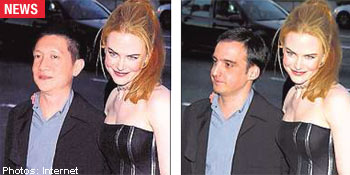
Recently I read with some amusement the recent uproar over a local hairstylist’s manipulation of a photograph – he superimposed his image alongside that of actress Nicole Kidman’s. With this photograph, he falsely claimed to have styled Nicole Kidman’s hair for various public events and used that to advertise his hair salon.

Pic on the left: Nicole Kidman with local hairstylist Jonal Chong: Pic on the right: orginal - Nicole Kidman in the same pose and dress with Spanish director Alejandro Amenabar

Many of us think that the manipulation of images was only made possible with Photoshop. While the software certainly makes manipulation easy, there have actually been fake photographs since the invention of photography.

Historical Image Manipulation
The image below was taken in 1917 by 2 young girls in England, with a simple camera. Some people today still believe the photograph is real.

A "Fairy" photograph from 1917 from Cottingley, England by Elise Wright and Frances Griffiths

With digital manipulation possible, there is virtually no limit to what can be done to an image. I like to correct my photographs to accentuate the aesthetics – brighten it a little, sharpen it up here and there. Occasionally, I entertain my toddler son by superimposing whimsical additions such as a bow-tie or rabbit teeth over photographs of him.

The important questions when we manipulate an image are, why are we doing this, and what are our purposes and intentions?

How ethical is it to manipulate the image?

I believe the answer is if the picture is taken for personal or artistic purposes only, then pretty much anything goes because only aesthetic considerations come into play. Manipulation only becomes a problem, and a question of ethics, when the artist or photographer lies about his motivations, methods, and conclusions, and presents images with the purpose to intentionally deceive.

References
Chan, R, 2011, My Paper, Was Singapore hairstylist with Nicole Kidman, viewed 13 February 2011, <http://www.asiaone.com/News/AsiaOne+News/Singapore/Story/A1Story20110106-256620.html>

Lodriguss, J, Catching the Light, viewed 14 February 2011, <http://www.astropix.com/HTML/J_DIGIT/ETHICS.HTM>


Monday, February 14, 2011

- Web Design - What makes for good design?

The Online Citizen: Community of Singaporeans or political party?


Screenshot from TOC's Website


A controversial topic relating to blogsites and the unspoken political rules that govern them surfaced again recently. The Online Citizen (http://theonlinecitizen.com/), a socio-economic blog in Singapore, was forced to register as a political association in January 2011. Besides being restricted from receiving funding only from foreign sources, this gazetting also required the owners, editorial team and administrators of TOC to be revealed, and a committee of president, treasurer and secretary had to be designated.

Discussions on the government’s decision ensued almost immediately. From the group of taxi drivers I overheard at a coffeeshop, laments about Singapore being a “nanny state” and the government being “too strict” were frequently heard.

When it was revealed that a former Nominated Member of Parliament (NMP) was one of the four volunteers at TOC, some people insinuated that he had become an NMP as an “attention-gathering exercise” and a stepping stone to entering partisan politics.

As usual, this gazetting was a hot topic in the community and led to many renewed criticisms of the incumbent Singapore PAP government.


References
Siew, K, H, The Oneline Citizen, For the last time, TOC is not a political party!, viewed 8 February 2011, <http://theonlinecitizen.com/2011/02/for-the-last-time-toc-is-not-a-political-party/>

Saturday, December 11, 2010

Introduction

The purpose of this blog is for me to discuss the issues in design and publication found in print and on-line sources. I hope to achieve a weblog that is informative and relevant in today's context, I will also look at the positive, negative, socio and political impact if any that blogging has left and later reflect on it's process.